Healthy / minimal cracking
Best case
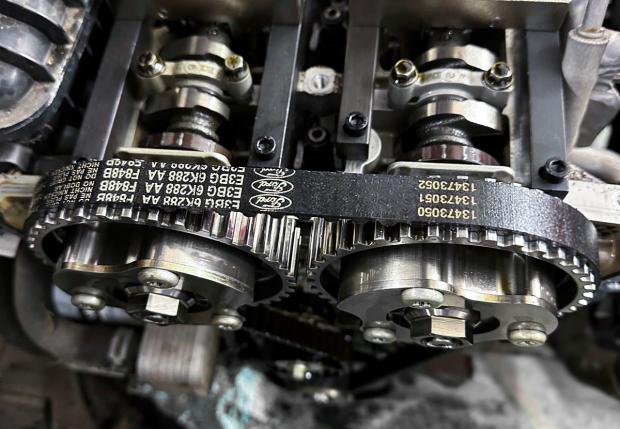
Minimal visible cracking, no missing material — still, if it’s near the interval, we recommend changing before it turns into a failure.
Wet belts run inside the engine oil. When they wear, they can crack, delaminate, or lose teeth. If that happens, it’s not “just a belt” — it can mean serious engine damage.
Two belts can look completely different at similar mileage depending on oil quality, servicing habits, heat cycles and driving style. The safest approach is to treat the wet belt interval seriously.
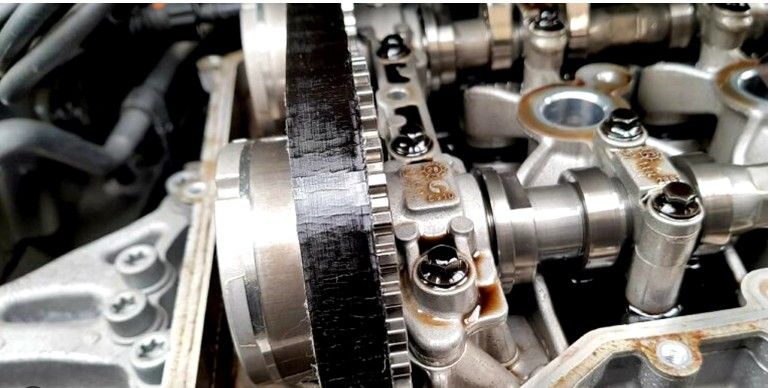
Wet belts operate in engine oil. As they degrade, particles can contaminate oilways and components — and if timing is lost, engine damage can happen fast.
This is a simple guide, not a guarantee. If your belt has never been changed and you’re around the interval, we strongly recommend planning it.